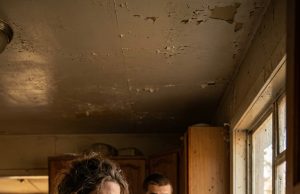
When Carmen Ruiz announced she was getting married at eighty-nine, her family didn’t know whether to laugh or feel afraid.
The news arrived suddenly, like a dish placed on the table that no one had ordered.
“Married?” her eldest daughter, Maria, asked, torn between disbelief and concern. “Mom, you’ve been widowed for thirty years.”
“Exactly,” Carmen replied calmly, in a way that silenced the room. “It’s time I dressed up for someone again.”
No one knew what to say. Carmen lived alone in an old apartment in Triana, Seville. She had three children, seven grandchildren, and a great-granddaughter she knew only through photographs. Visits had become rare and hurried, filled with polite smiles and quick goodbyes. Yet now she spoke of dresses and flowers, music and a simple lunch, a ceremony.
“And who’s the lucky groom?” one grandson joked, meaning no harm.
“He’s very punctual,” Carmen answered with a faint smile. “He’s never late.”
The words left an uneasy silence behind.
Still, Carmen began preparing in earnest. She visited a neighborhood seamstress. Chose simple white shoes. Ordered a small bouquet of jasmine. Asked at city hall about the paperwork.
“Are you sure, ma’am?” a clerk asked gently.
“More certain than many brides who come through here,” Carmen replied.
In time, the family accepted it. They told themselves it was her way of closing a chapter, of feeling alive, of saying goodbye. The “wedding” was scheduled for a Saturday in May.
That day, everyone came. Children who hadn’t spoken in months. Grandchildren who barely knew her story. Even a sister traveled from Valencia. The church was nearly empty—just family, modest flowers, a pianist playing softly.
Carmen entered arm in arm with her youngest grandson, dressed in white. She was smiling. Her eyes shone.
“Grandma,” he whispered, “where’s the groom?”
Carmen looked toward the altar.
“He’ll arrive.”
They waited.
Five minutes. Ten. Fifteen.
Whispers began to ripple through the pews.
“Poor woman…”
“She’s not well…”
“She’s lost her mind…”
Then Carmen asked for the microphone. Her voice trembled, not from age, but from truth.
“Thank you all for coming,” she said.
She paused.
“There won’t be a groom today. There never was.”
The air grew heavy.
Why had she gathered them all? What was this wedding really about—and for whom had Carmen Ruiz dressed in white?
Holding the microphone firmly, Carmen looked at each face before her: her children, her grandchildren, her family. Some looked confused. Some irritated. Others—perhaps for the first time—truly attentive.
“I haven’t lost my mind,” she said quietly. “I’ve found it again.”
She asked them to sit. The pianist stopped. Silence filled the church.
“I was married once,” she continued. “To Antonio, the grandfather of many of you. We promised each other something that wasn’t written anywhere—not to let our love fade. When he died, I kept that promise. But over the years… I found myself alone.”
She spoke without accusation, with a calm clarity that cut deeply.
“Sunday visits stopped. Phone calls grew shorter. I learned not to bother anyone. Not to ask. Just to wait.”
Maria lowered her gaze. A grandson shifted uneasily.
“A year ago,” Carmen went on, “my doctor spoke to me honestly. Time is running out. And I thought: if I don’t get married now, I never will.”
Someone cleared their throat.
“I didn’t marry a man,” Carmen said. “I married a promise. The belief that I, too, deserved a proper farewell—with witnesses. That love doesn’t end when someone dies, but when we stop caring.”
She reached into her bag and took out an envelope. Inside were handwritten letters—one for each child and grandchild.
“I didn’t bring you here to deceive you,” she said. “I brought you here to say goodbye properly. To look you in the eyes. So you would remember that I am still here.”

Maria broke down in tears. She stood and wrapped her arms around her mother.
“I’m sorry,” she whispered. “I thought you’d always be here.”
“That’s what we all think,” Carmen replied gently. “Until we’re not.”
The priest, who had understood more than anyone realized, stepped forward.
“If you’ll allow me, Carmen,” he said softly, “perhaps there is no groom today—but there is a commitment.”
She nodded.
“Promise me something,” Carmen said. “Not when I’m gone. Now. Promise you won’t let years pass without sitting together. Promise you won’t wait for a funeral to reunite.”
One by one, they said yes—not from obligation, but from a mix of shame and love.
Only then did Carmen truly smile.
The church remained silent after the vows. No applause, no rush to stand. It was a different kind of silence—heavy with late understanding. Carmen placed the microphone down gently and sat in the front pew. For the first time in years, she was not alone.
Afterward, they all walked out together.
Lunch was held in a small courtyard nearby, beneath blooming orange trees. Nothing extravagant. Simple food, shared wine, bread broken by hand. But something had shifted. Conversations were no longer rushed or polite—they were real.
Carmen sat at the center of the table. Not as an elderly woman visited out of duty, but as the heart of the gathering.
“I never stopped paying attention,” she said with a smile. “I just stopped interrupting.”
That afternoon, Maria made an unexpected offer.
“Mom, why don’t you come live with me for a while?”
Carmen declined gently.
“I don’t need to move,” she said. “I needed to be invited back into your lives. And today, I was.”
The months that followed proved those words were not fleeting. Visits became frequent. Sundays found their meaning again. Carmen had a permanent seat at every family table.
A year later, on a quiet autumn afternoon, Carmen passed away peacefully in her Triana apartment, in her sleep.
On her bedside table, they found a small box. Inside was a photograph from that “wedding day”—Carmen dressed in white, surrounded by her family. And a note written in her steady hand:
“I didn’t marry a man.
I married the truth.
And I leave knowing I am no longer alone.”
On the day of the funeral, the church was full again. This time there were no doubts, only gratitude.
Maria spoke for everyone:
“My mother didn’t lose her mind at eighty-nine. She was brave. She forced us to see her—and to see ourselves. To remember that love isn’t inherited. It’s nurtured.”
As they left, someone whispered:
“In the end, it really was a wedding.”
And they were right.
Because Carmen didn’t celebrate an absence.
She celebrated a reunion.
And that was the longest-lasting marriage of all.