The surgeon emerged about twenty minutes later.
Ethan was still alive—just barely. The bleeding had been stopped, but the swelling in his brain was critical. The doctors said the next forty-eight hours would determine his fate.
Claire collapsed into tears. My mother pressed her hands together, murmuring prayers she hadn’t spoken in years. Mark stood slightly behind them, silent, staring at the floor.
I kept my eyes on him.
When the others drifted off toward the vending machines, I stayed where I was. Mark hesitated, unsure who to follow, then finally sat down across from me.
“I’m so sorry,” he said.
“Had you been drinking tonight?” I asked softly.
He jerked his head up. “What?”
“The driver was intoxicated,” I continued. “Twice over the legal limit. Black SUV. Front-end damage.”
All the color drained from his face.
“I—I only had a couple of glasses of champagne,” he stammered. “That’s it.”
I leaned closer. “I’ve known you for six years, Mark. You don’t flinch unless you’re lying.”
His hands began to shake as he clasped them together. “It was an accident.”
The words hung between us, heavy and undeniable.
He confessed in broken pieces—how the engagement party grew louder, how people kept urging him to drink, how he stepped outside to clear his head and convinced himself he was okay to drive. He never saw the light change. He only felt the crash.
“I panicked,” he said. “I went home. Showered. Changed. I was going to turn myself in. I swear.”
“After the party?” I asked.
Tears welled in his eyes. “I didn’t know it was Ethan. I didn’t know.”
I shot to my feet so fast the chair screeched across the floor. “You nearly k:illed my son.”
My mother’s voice cut through the air. “What are you talking about?”
Mark froze.
I turned toward them. “Ask him where he was an hour before you arrived.”
Claire looked at him, confused. “Mark?”
He opened his mouth, closed it, then finally whispered, “I was driving.”
The truth spilled out in the middle of the waiting room. People stared. A nurse asked us to lower our voices.
Claire backed away from him as if he were dangerous. “You said you went to the store.”
“I was terrified,” he said.
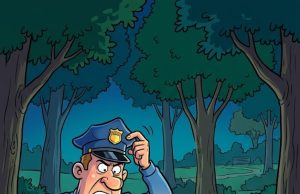
I walked straight to the front desk and asked for a police officer.
When they arrived, Mark didn’t resist. As they cuffed him, he looked at Claire with desperation. “I love you.”
She didn’t respond.
Later, my mother confronted me, her face tight with fury. “You could have handled this quietly. Do you realize what you’ve done to this family?”
I looked at her, too tired for anger. “My son is fighting for his life. That’s what was done to this family.”
She had nothing to say.
That night, sitting beside Ethan’s hospital bed, listening to the steady rhythm of the machines, something painful and clear settled in.
Blood didn’t decide who stood up for you when it mattered.
Choices did.
Ethan woke up three days later.
He couldn’t speak at first—his throat sore from the breathing tube, his movements slow and unsteady. But when his fingers curled weakly around mine, I cried harder than I had on the night of the crash.
Mark was charged with DUI causing severe injury and leaving the scene. The engagement was never announced online. The ring was quietly returned. Claire stopped answering my calls—and eventually blocked my number altogether.
My mother came by once.
She stood at the end of Ethan’s hospital bed, arms folded, eyes flicking over the monitors. “This never needed to go this far,” she said.
“It did,” I answered. “He made a choice. And so did you.”
She walked out without a goodbye.
The case dragged on for eight months. I took the stand. Ethan did too—slowly, his words slightly slurred, something the doctors said might improve, or might not. Mark pleaded guilty and received a seven-year sentence.
When the judge announced it, Mark didn’t look at me. His eyes went straight to Ethan.
“I’m sorry,” he said, his voice cracking.
Ethan gave a single nod. Nothing more.
The road back was long—physical therapy, speech therapy, restless nights filled with bad dreams. But little by little, my son found his way back to himself. A year later, he returned to college, walking with a faint limp, but alive.
One evening, sitting on the porch as the sun dipped below the horizon, Ethan asked quietly, “Why didn’t Grandma care?”
I chose my words carefully. “Some people care more about celebrations than accountability,” I said. “That has nothing to do with you.”
He rested his head on my shoulder. “You stayed.”
“Always,” I replied.
I haven’t spoken to my mother since. I hear things secondhand—how she tells others the family was “destroyed by tragedy,” how she never says whose tragedy it truly was.
Claire remarried two years later. I wasn’t invited.
And I didn’t mind.
Because when my son lay on an operating table, fighting for his life, everything became painfully clear—who showed up, who stayed away, and who caused the harm.
Some families are connected by blood.
Others are defined by what they’re willing to protect, even when it costs them everything.