Clara Álvarez had dust in her lungs and lemon cleaner on her hands for most of her life, but she never cared.
The Hamilton estate sat atop a hill in Westchester, New York, forty minutes from Manhattan, a world apart from everything else. Tall hedges, iron gates, white columns. The kind of place where people stopped to look as they walked by.
Clara had walked up that path for eleven years.
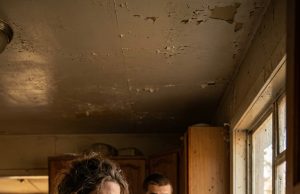
She knew every creak in the floorboards, every smudge on the glass doors, every lingering stain on the white marble of the foyer. She knew which light bulbs flickered and which faucets dripped. She knew that if you didn’t move the handle in the downstairs guest bathroom, the water would keep running all night.
Most of all, she knew the people.
Adam Hamilton, forty-three years old, a tech investor with a million-dollar smile when he remembered to use it. A widower for three years, he still wore his wedding ring out of habit.
His son, Ethan, seven years old, more dinosaur than child most days, with elbows, questions, and unexpected hugs.
And Margaret.
Adam’s mother.
The matriarch.
Queen of the house, even though she didn’t technically live there; she had a luxurious apartment in the city, but she was at the estate so often that Clara sometimes forgot her official address.
Margaret Hamilton was one of those women who would notice if someone moved a vase three inches to the left.
She wore pearls in the kitchen and drank her coffee as if she’d been offended.
Clara respected her.
She also feared her.
Everything changed one Tuesday morning.
Clara arrived at 7:30 a.m. as usual, the September air fresh enough to make her button up her cardigan more tightly as she walked from the bus stop to the long driveway.
Inside, the estate was silent. The staff entrance opened onto the foyer, then into the kitchen: a vast, gleaming space with marble countertops and stainless-steel appliances that Clara cleaned four times a day.
She hung her coat in the small staff closet, slipped on her indoor shoes, tied her hair back, and checked the handwritten list on the counter.
Margaret’s list.
A new one every day.
TUESDAY:
Polish the dining room silverware
Change the sheets in the guest bedroom (blue suite)
Deep clean the upstairs bathroom
Breakfast 8:00 – oatmeal, fruit, coffee (no sugar)
Clara smiled.
She liked lists.
They made everything seem manageable.
She put a pot of coffee on to boil—strong, black, two cups always ready for Margaret at 8:05 sharp—and started preparing breakfast.
At 7:50, she heard footsteps upstairs. Ethan’s voice drifted in.
“Clara, are there waffles?”
“Not today,” she replied, lifting the lid of the oatmeal pot. “Oatmeal and fruit. Very healthy.”
He appeared in the doorway in dinosaur pajamas, his hair standing on end, rubbing his eyes.
“Healthy is boring,” he complained. “At least there are blueberries?”
“Yes,” she said, placing a bowl in front of him. “And if you eat them, you’ll grow as strong as a T-Rex.”
He frowned. “T-Rexes didn’t eat fruit.”
“Then strong as a… Stegosaurus,” she said.
“They ate plants,” he conceded, taking his spoon. “Okay. I like Stegosaurus.”
She poured him orange juice and placed a coffee mug on the far end of the counter, right where Margaret liked it.
As always, the click of heels echoed in the hallway.
“Good morning,” Clara said.
Margaret entered the kitchen wearing a cream blouse and tailored trousers, her makeup flawless, her hair in a sleek bob. She glanced at the counter, picked up the coffee without looking at Clara, and took a sip.
“Too hot,” she said.
“I’m sorry, Mrs. Hamilton,” Clara replied quickly. “I’ll let it cool a little longer next time.”
Margaret hummed, noncommittal.
Her eyes scanned the kitchen, taking stock, then rested briefly on her grandson.
“You’re dropping some oatmeal,” she said.
Ethan stopped mid-bite and checked his shirt.
There was nothing.
“Gran,” he said patiently. “There’s no oatmeal.”
“Well, there will be,” she said. “Don’t slouch.”
She took another sip of coffee and headed for the door.
“Adam will be working from home today,” she said to Clara over her shoulder. “People are coming this afternoon. Investors, of sorts. The house must be spotless. As always.”
“Yes, ma’am,” Clara replied.
It wasn’t until mid-morning that Clara noticed the door to the jewelry room was open.
Most people didn’t know such a room existed in the Hamilton house. It wasn’t on the official tour Margaret gave guests. It was tucked away behind the upstairs office, a small space with a climate-controlled cabinet and a safe built into the wall.
That’s where the Hamilton family heirlooms resided.
Antique money, antique diamonds, antique gold.
Clara only went in to dust them.
That day, she’d put it on her list herself: just a light dusting, nothing important.
As she passed the office on her way to the laundry, she saw the door ajar.
Strange, she thought.
Margaret always kept it closed.
Clara hesitated, then opened it wider.
The jewelry cabinet was locked, the safe hidden behind its panel, everything seemingly in order. Even so, the hairs on the back of her neck stood on end.
She went inside, wiped the glass shelves with a soft cloth, careful not to touch anything, then stepped back and closed the door.
She didn’t see the missing piece.
Not then.
Around 2:00 p.m., the shouting began.
Clara was in the upstairs hallway, vacuuming the carpet.
First, she heard Margaret’s voice.
High-pitched. Thin.
“Impossible! It was right here. RIGHT HERE!”
Then came Adam’s voice, deeper, trying to remain calm.
“Mom, can you…?”
“Don’t you dare tell me to calm down,” Margaret interrupted. “Your father gave it to me. It’s all I have left.”
Clara turned off the vacuum cleaner.
The footsteps were approaching the jewelry room.
She pressed herself against the wall as Margaret nearly rammed into her.
“Clara,” Margaret growled. “Did you touch the jewelry cabinet today?”
Clara swallowed.
“Yes, I dusted the shelves,” she said. “Like always on Tuesdays. I didn’t open anything. Why, is something wrong…?”
“It’s gone,” Margaret said, her eyes blazing. “My mother’s necklace. The emerald pendant. Gone.”
Clara’s stomach dropped.
“I… I didn’t see it,” she said. Never…
“You were the only one here,” Margaret interrupted. “You and that other girl.”
“The other girl” was Paula, a weekend maid who sometimes came on Tuesdays when there was a lot of work.
“She was only here for two hours,” Clara said. “She never came into this room.”
“How do you know?” Margaret demanded.
“Because I was with her,” Clara said, her face flushed. “We cleaned the guest suite and the upstairs bathroom together. Mrs. Hamilton, I swear, I didn’t…”
Adam appeared behind his mother, his tie loosened, lines of worry etched on his forehead.
“Mother,” he said quietly, “let’s calm down.”
“Someone took it, Adam,” she exclaimed. “It doesn’t just disappear. And it wasn’t your son, or you, or me.” Her eyes settled on Clara. “That leaves the staff.”
The way she said “the staff” made Clara shudder.
“I’ve worked here for eleven years,” he said softly. “I’ve never taken a single stamp.”
Adam rubbed his temples.
“We need to call the police,” he said. “At least to file a report. The insurance…”
“Insurance?” Margaret said, furious. “You think this is about the insurance? I want whoever did this held accountable.”
Her gaze never left Clara.
The police arrived. Two officers, a man and a woman.
They took statements.
They checked the cabinet and the safe. There were no signs of forced entry.
“Who has access?” the officer asked.
“My son and I,” Margaret said. “And the cleaning staff.”
Clara and Paula stood near the door, feeling like they were being photographed for a wanted poster.
“We’ll need a list of all the employees who were in the house today,” the officer said. “And the security footage.”
Adam nodded, his jaw tight.
“We have cameras in most of the common areas,” he said. “I’ll send the footage.”
Clara watched his face as he spoke.
He seemed conflicted.
As if he wanted to believe her.
As if he wasn’t sure he could.
They questioned Clara in the small room next to the kitchen.
“Have you ever had any trouble with the law?” the officer asked.
“No,” she said. “Never.”
“Financial problems? Debts?”
She thought of the hospital bill still on her kitchen counter from when her mother fell and broke her hip.
“We all have bills,” she said. “But I pay what I can. I don’t steal.”
“How exactly did your morning go?” they asked.
She told them everything. Minute by minute.
When they left, her hands were shaking.
Ethan found her in the pantry, sitting upside down on a box, breathing heavily.
“Clara?” “Why did the police come?” she asked, peeking her head out.
She quickly wiped her eyes.
“Someone lost something important,” she said. “They’re trying to find it.”
“Did you lose it?” he asked.
“No,” she said. “I didn’t.”
He came closer and put his arm around her waist.
“I know,” he said.
Her throat tightened.
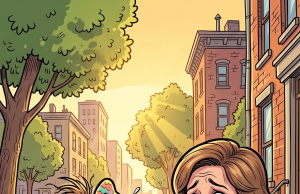
Two days later, she was arrested.
In her apartment.
In front of her neighbors.
She had just returned from the supermarket, carrying a paper bag, when a police car pulled up and two officers got out.
“Clara Álvarez?” one of them asked.
“Yes,” she said, her heart racing.
“You’re under arrest for theft,” he said.
The world went blurry.
The bag slipped from her hands, tumbling oranges down the hallway.
Her landlord poked his head around the door. Mrs. Ortega from 2B gasped and whispered something into her phone.
Clara wanted to sink into the floor.
“I didn’t…” she began.
“You can tell the judge,” the officer said, his tone not hostile. “You have the right to remain silent…”
She barely heard the rest over the roar in her ears.
At the police station, they took her fingerprints.
They removed her earrings.
They removed her belt.
They put her in a cell with another woman who smelled of cigarettes and bad luck.
No one came for her.
No one called.
She asked for a lawyer.
They told her one would be assigned.
It didn’t happen that day.
Or the next.
The story was on the news that weekend.
“Millionaire Hamilton Family Robbed by Trusted Maid,” one headline read.
Another: “Trusted Employee Betrays Hamilton Legacy.”
Clara didn’t have a television in her apartment, but she saw the newspapers.
Her photo—a ten-year-old employee ID card, overly bright—was all over the local websites.
“Did you do it?” the woman in the cell asked.
“No,” Clara said.
The woman shrugged. “It doesn’t matter. They think it does.”
On Monday, they took her to court.
No one stood beside her at the defense table.
The Hamiltons’ lawyer was there.
Clara recognized him from the articles. Victor Hale. Expensive, elegant suit, expensive, elegant haircut. He didn’t look at her.
The judge set bail higher than she could ever afford.
She stayed where she was.
Alone.
That afternoon, a young woman in a discount blazer approached her in the room behind the courthouse.
“Ms. Alvarez?” she said. “My name is Jenna Park. I’m… technically not a lawyer yet. I’m a legal intern with the public defender’s office.”
Clara blinked.
“They said you didn’t have anyone,” Jenna continued. “So… I asked my supervisor if I could at least meet you. See if we can assign you someone.”
Clara looked at her for a moment.
Then she burst into tears.
Clara was released to await trial with an ankle monitor and conditions: curfew, reporting requirements, no contact with the Hamiltons.
She returned to her small one-bedroom apartment, sat on the sofa she’d bought at a thrift store, and stared at the wall.
Her phone was silent.
No calls from Adam.
No calls from Margaret.
No calls from any of the Hamiltons.
Until two nights later.
At 7:06 p.m., there was a knock at the door.
“Who is it?” she called, her heart pounding.
“It’s me,” a small voice answered.
She opened it.
Ethan stood there, wearing a hoodie and sneakers, his hair standing on end, holding a folded piece of paper.
Behind him, the nanny, flustered, hurried past, talking on her phone.
“Ethan,” Clara whispered. “You can’t be here.” Your grandmother—
“I ran away,” she said. “I was on the phone.”
She hugged him tightly around the waist.
“I know you didn’t do it,” she said into her sweater. “I told Dad. He didn’t listen. But I know.”
Clara wiped her eyes, her throat too tight to speak.
He handed her the folded paper.
“Here,” she said shyly. “I drew this for you.”
She unfolded it.
A crayon drawing of a large house on a hill.
A little boy.
A woman with black hair in a ponytail.
The word FAMILY written at the top in shaky letters.
Her chest ached.
“Thank you,” she whispered. “You have to come back, son. They’re going to worry.”
“I didn’t want you to be alone,” he said.
The nanny arrived, panting.
“Ethan! You can’t just run away like that!”
“I was saying goodbye,” she said defiantly.
The nanny gave Clara an apologetic look and took Ethan’s hand.
“We’ll meet again,” she said, looking back.
Clara stood in the doorway long after they left, the drawing trembling in her hands.
Something she thought was dead—her inner struggle—had awakened.
She wouldn’t let them define her as a thief.
Not without them listening to her.
With Jenna’s help, Clara began to fight.
They didn’t have much.
No money.
No high-profile lawyers.
But they had persistence.
They requested the security footage from the Hamilton estate.
Most of it seemed normal.
People moving through the rooms.
Lights turning on and off.
But the night the necklace disappeared, there was a failure.
A power outage.
“The transmission cuts out exactly four minutes,” Jenna said, frowning in front of the computer. “From 10:42 p.m. to 10:46 p.m., in the upstairs hallway in front of the jewelry room.”
“Could someone have… turned it off?” Clara asked.
“Maybe,” Jenna said. “Or the system malfunctioned. Or someone with access tampered with it.”
They filed a motion to obtain more detailed records from the security company.
The Hamiltons’ attorney objected.
The judge denied it.
“It’s speculation,” Hale said. “The recording is irrelevant. The facts remain: Ms. Alvarez was in the area.”