The Geometry of a Reappearance
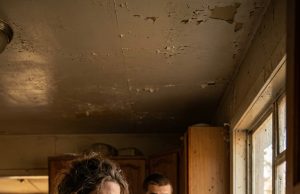
The dining room of the old downtown restaurant in Nashville was an exercise in absolute curation, its high ceilings draped in the warm, gold resonance of polished cherry wood, shimmering crystal decanters, and the low, metronomic hum of a live jazz trio. It was the sort of establishment where patrons calibrated their laughter to a polite, uniform register and conducted their conversations in hushed murmurs, as if the manifestation of authentic, unmanaged emotion might fracture the expensive serenity of the space.
I had just concluded an unhurried dinner and was reaching for the strap of my leather purse when a child materialized at the margin of the table, appearing so silently she might have been woven from the shadows of the velvet booth.
She was balancing a wicker tray laden with crimson roses that seemed nearly as expansive as her entire torso, her slight frame nearly swallowed by the offering. Her dark hair was gathered into a loose, unravelling ribbon at the base of her neck, and an oversized cable-knit sweater hung precariously from one shoulder, its sleeve brushed with the wear of a long winter. She could not have been older than eight, yet her posture possessed a quiet, professional patience that belonged to a much older soul.
“Would you care for a blossom tonight, ma’am?” she inquired, her voice a delicate, bird-like vibration that barely carried over the ambient hum of the dining room.
I offered a reassuring smile, my thumb already sliding a crisp twenty-dollar bill from my wallet. “I think I’d love one, sweetheart.”
But the moment I extended the currency across the linen cloth, her fingers didn’t move to receive it. Her focus had become entirely stationary, her large, dark eyes locked onto the back of my left hand with an intensity that caused me to pause.
More specifically, she was staring at the jewelry on my ring finger.
“Ma’am…” she whispered, taking a cautious step closer until the scent of the fresh stems rose between us. “That gold flower you’re wearing… it’s exactly like the one my mother keeps.”
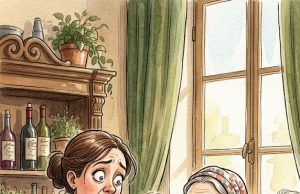
The statement hung in the heavy air of the restaurant, its implications refusing to settle into any logical category. I remained completely motionless, my hand suspended over the table while the background noise of clinking silverware seemed to evaporate.
The object on my finger was not a piece of manufactured luxury; it was a bespoke antique replication, a delicate gold rose whose petals cupped a deep, wine-colored garnet that held the light like a small, burning coal. Thirteen years prior, a solitary craftsman in a narrow workshop near the river had shaped the metal by hand, his eyes crinkling as he delivered the finished work with a specific warning: “The mold is gone now, girls. I’ll never construct another pair of these as long as I live.”
A pair.
I swallowed slowly, the leather of my purse suddenly feeling cold against my palm. “What did you say about your mother’s jewelry, little one?”
The girl offered a rapid, serious nod, her eyes bright with the absolute certainty that only children possess before they learn to doubt their own senses. “My mom has one that matches it completely. The same golden leaves. The same red stone in the middle.” She reached out a mittened finger, hovering it just above my knuckle. “It’s the exact same shape.”
A sudden, localized chill traveled down the length of my spine. “That’s an impossibility, honey,” I murmured, though my own voice sounded thin and unconvincing. “The man who made this only created two in the whole world.”
But the child didn’t waver. “No, ma’am. My mom keeps her rose tucked inside a small velvet pouch under her pillow. She told me it’s the most important thing we own because it’s a reminder that beautiful things can return when you least expect them.”
The Architecture of an Absence
My heart performed an uncoordinated, frantic skip against my ribs, and for a handful of seconds, the grand dining room disappeared entirely—the laughter of the patrons, the low weeping of the saxophone, and the amber light from the chandeliers all dissolved into a gray mist.
I looked at the girl, my focus narrowing until she was the only physical reality left in the space. “Tell me your name, sweetheart.”
“Ivy.”
“And your mother?”
“Elena.”
The name arrived like a low-frequency echo from a canyon I thought I had walled off a decade ago.
Elena.
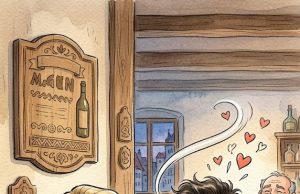
Thirteen years prior, she had been the sun around which my entire universe revolved. We had entered the state university together as roommates, both of us entirely green to the speed of the city, trying to find our footing in a landscape that moved with a terrifying, mechanical momentum. She had been fearless, possessed of a radiant, uncalculated warmth that made strangers surrender their secrets within five minutes of meeting her.
We had shared everything a life could hold at twenty-one. Our ambitions, our late-night analytical arguments over cold coffee, and the specific heartbreaks that come when you realize the world isn’t as gentle as you were promised. One sweltering July afternoon, after six months of systematically pooling our meager tips from the campus diner, we had walked into that small artisan shop near the river.
We had commissioned the rings as a tangible anchor for an intangible vow.
A permanent alliance, we had called it. Two golden roses, identical in every microscopic fissure of the metal.
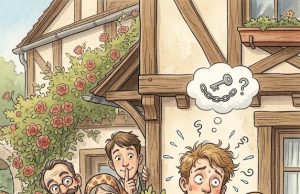
We wore them like armor until the autumn when the narrative broke. Elena had become infatuated with an itinerant musician whose ambition was as vast as his lack of reliability, and within a fortnight, he had convinced her to pack her belongings into a rusted station wagon and depart for the West Coast. At the time, the departure felt like a clean betrayal, a sudden abandonment that left me standing on the porch with an empty apartment and a resentment that hardened into a permanent silence.
Then, the current of life took over. The years accumulated with a predatory speed. Telephone numbers were retired, old addresses were scrubbed from the ledgers, and people drifted into different hemispheres until the memory of her voice became an artifact. I had assumed she was gone forever.
Until the child with the wicker tray brought her back.
The Corner Café
I brought myself back to the reality of the restaurant, my fingers trembling slightly as I lowered my hand. “Is your mother somewhere nearby, Ivy?”
The girl shook her head, the loose ribbon at her neck shifting. “She’s waiting outside by the brick arches near the corner café. She doesn’t like me selling the stems late at night without her watching from the light.”
A suffocating tightness developed behind my ribs. “Would you be willing to guide me to her position?”
Ivy’s face illuminated with a sudden, radiant clarity that made her look like the photographs I still kept in an old cedar chest. “Yes, ma’am! She always says that the best things happen when you follow a thread.”
She reached out and closed her small, calloused fingers around my hand without a single trace of hesitation, leading me between the white-clothed tables with the confidence of a seasoned navigator. The warm, insulated luxury of the steakhouse faded behind us as we pushed through the heavy glass exterior doors and stepped out into the cool, damp air of the Tennessee night.
The city hummed with a low, unhurried energy—the wet hiss of tires on asphalt, the distant, brassy notes of a blues guitar drifting from a basement lounge, and the scattered laughter of couples lingering on the outdoor patios. Ivy moved briskly down the sidewalk, her small boots clicking a steady rhythm against the concrete as she pulled me along in her wake.
“She’s going to be so surprised,” the child cheered, her eyes fixed on the path ahead. “She told me this morning that sometimes the world remembers you even when you think you’ve been forgotten.”
We came to a halt outside a modest café whose windows were dark, save for a single green glass lamp glowing near the outdoor seating area. A woman was sitting alone at one of the wrought-iron tables, her hands cupped around a ceramic mug of tea.
She looked deeply tired—the sort of bone-deep, structural exhaustion that comes from years of standing on hard floors—but her posture retained a delicate, familiar grace. When she lifted her chin and noticed our approach, her expression underwent an instantaneous, violent transformation.
“Ivy?” she called out, her voice tight with a protective alarm. “Who is that with—”
The sentence died in her throat. Her gaze dropped from my face to my left hand, where the garnet stone was catching the green light of the lamp.
Time seemed to fold back upon itself, collapsing thirteen years into the space of a single, shared breath.
“Claire?” she whispered, the syllable sounding like a prayer she hadn’t spoken aloud in a decade.
My throat constricted until it was painful to speak. “Elena.”
The Inventory of the Years
For a long interval, neither of us made a movement to bridge the space between the tables, the sheer impossibility of the intersection rendering our limbs useless. Then, Elena stood up so abruptly her chair groaned against the pavers, her hands dropping to her sides as she stared at me through the dim light.
“I… I don’t possess the vocabulary for this moment,” she said, her voice fracturing at the margins. “I thought you were a ghost.”
I let out a shaky, uncoordinated laugh, the tears already hot against my lower lids. “Apparently your daughter has an eye for structural detail that we both lacked. She identified my hand before I could even pay for a blossom.”
Elena looked down at Ivy, who was standing between us with her arms crossed over her wicker tray, her chest expanded with the absolute triumph of a child who had solved a grand mystery.
“I told you, Mama!” Ivy crowed. “It’s the twin to the one under the pillow!”
Elena reached out, her fingers smoothing a dark curl away from the child’s temple with a maternal tenderness that made my chest ache. “She has an exceptional eye,” she murmured. Then, with a slow, deliberate motion, Elena reached into the deep pocket of her weather-beaten coat and withdrew a small, faded velvet pouch that was smooth from years of friction.
My breath caught in my throat as she loosened the drawstring.
She tipped the fabric, and the second gold rose slid into the palm of her hand. It was an identical replication—the same delicate, overlapping petals, the same deep garnet center glowing softly under the green lamp.
“I carried it through every relocation, Claire,” she said, her voice dropping into a quiet, reverent register. “Even when the logic of my life suggested I should liquidate everything of value, I couldn’t let go of this piece of metal.”
A profound, restorative warmth seemed to irrigate the old dry places behind my ribs. “Why keep it beneath your pillow, Elena? That seems like a strange place for an heirloom.”
Elena offered a faint, bittersweet smile, her fingers closing over the gold. “Because on the nights when the floor felt too cold and the hours were too long, the metal reminded me that somewhere out there, in the world I had abandoned, there was still one person who had known me when I was clean and full of hope. It was my anchor.”
The simplicity of the confession nearly broke through my composure. “What happened to the California dream?” I asked, pulling out a chair and gesturing for her to sit.
“The musician proved to be exactly what your brother warned me he would be,” Elena said, her tone entirely devoid of bitterness, carrying instead the flat pragmatism of a survivor. “He departed within a twelvemonth, leaving me with an empty bank account and an early pregnancy. I returned to Nashville because the city was the only place that felt familiar, but I was too humiliated by my own failure to knock on your door. I didn’t want you to look at me and see a confirmation of your worst fears.”
She explained the logistics of her survival over the subsequent years with a clinical detachment. She had managed a sequence of low-wage positions—working as a server at a transit diner by day and cleaning the offices of downtown corporations after the lights went out. Ivy had eventually begun helping with the flower sales during the dinner hours to supplement their rent.
“I intended to locate your name in the directory a thousand times,” Elena admitted, her eyes fixed on her tea. “But the months turned into seasons, and the seasons into a decade, and I didn’t know if you’d look at me with anger or simply look right through me.”
I reached across the wrought-iron table and covered her hand with my own, the two gold roses finally resting within inches of each other. “I thought you had dissolved into the West Coast, Elena. I never held the anger past the first year.”
The Campaign in the Quartz
Ivy looked between us, her brow furrowed as she tried to translate the adult language into her own framework. “So… you two were part of the same story before I was born?”
Elena laughed—a soft, melodic sound that carried the exact frequency of our college apartment. “We were the best of friends, Ivy. We were sisters before the map changed.”
The child’s eyes widened until they looked like black pearls under the green lamp. “Then this is exactly like the final scene of an afternoon movie!”
The three of us laughed together, a spontaneous, unburdened sound that traveled out into the Nashville night, clearing away the residual static of ten years of separation. For a handful of minutes, we simply sat in the quiet of the patio, absorbing the strange, quiet miracle that had used a child’s eyes to mend a broken circuit.
Then, my focus shifted to the wicker tray resting on the adjacent chair, where approximately two dozen red roses remained unsold. “Are the tables being generous tonight, Ivy?”
She gave a small, philosophical shrug of her shoulders. “The people in the suits are mostly talking about their numbers. They don’t look at the blossoms much after nine o’clock.”
I looked back toward the glowing glass exterior of the steakhouse across the lane, an aggressive, entrepreneurial impulse taking hold of me for the first time in years. I stood up and lifted the wicker strap over my own shoulder, adjusting the tray against my hip.
“Give me the ledger, Ivy,” I said, a genuine grin spreading across my face.
Elena blinked in utter bewilderment, her spoon suspending over her mug. “Claire, what exactly are you configuring?”
“Trust the architecture of the moment,” I told her, winking at the child. “The finest steakhouse in the financial district is about to experience the most relentless, high-pressure rose marketing campaign in the history of Tennessee commerce.”
Elena burst into a loud, uninhibited laughter that caused the café manager to peek through the blinds. “You are entirely insane! You cannot go in there in a designer coat selling stems!”
“Watch the execution,” I called back as I stepped off the curb.
I re-entered the dining room with a absolute, unblinking confidence. Because I knew the names of the regular patrons and understood the unspoken social codes of the room, I didn’t approach them as a solicitor; I approached them as an authority. I moved from booth to booth, suggesting to the executives that a dinner of that caliber was incomplete without a physical token of appreciation for their companions. Within twelve minutes, every stem had been liquidated, and the night manager had contributed an extra fifty dollars from the register “for the spirit of the evening.”
When I returned to the green lamp of the patio, Ivy was staring at the empty wicker tray with an expression of pure, unadulterated awe. “You emptied the entire inventory! How did you do that without them shouting?”
“It’s all about understanding the psychology of the room, little bird,” I said, dropping a heavy stack of bills into her small hand. “It was a team effort.”
The Convergence of the Rings
Elena looked up at me through the dim light, her features holding the exact same warmth I had carried in my memory for thirteen years. “The city didn’t manage to change your core, Claire. You’re exactly the same force you were at twenty-one.”
“Actually,” I replied softly, sliding into the seat beside her and looking down at our joined hands, “I think tonight is evidence that the things that truly matter are the only things that never alter.”
The night continued its gentle rotation around our table. Three individuals who had been orbiting the exact same square miles of concrete for over a decade, separated only by the thin walls of our own fears, had finally been brought back into alignment by a single ounce of shaped gold and the unblinking clarity of an eight-year-old child.
Elena slowly slipped the golden rose onto her finger for the first time since the station wagon had left the driveway. Under the halogen streetlamp, the two deep red garnets caught the light simultaneously, glowing with a soft, steady brilliance that seemed to push back the darkness of the surrounding alleys.
Ivy leaned her head against her mother’s shoulder, her dark curls settling against the worn fabric of the winter coat. “See, Mama?” she murmured as her eyelids began to turn heavy. “I told you that the miracles don’t require an invitation. They just know when the room is ready.”
Elena squeezed her child’s fingers, her gaze meeting mine over the lamp. And in that quiet, unhurried interval, I recognized the ultimate design of our lives. The current of time doesn’t actually lose the people who are engineered for our survival; it simply waits for the precise moment when we are strong enough to see them again. The light stayed green, the music from the lounge continued to float through the brick arches, and for the first time in thirteen years, the morning didn’t feel like a landscape I had to map alone.