On our son’s birthday, we returned home late in the afternoon, tired but happy: balloons, cake, friends, children’s laughter.
The party was a success.
It was only when we walked up the steps that we saw a small, neat gift sitting right outside the door.
A blue and white box with a silver bow. And a note: “For my grandson” in a familiar, stiff handwriting.
We immediately realized who had arrived. My mother-in-law.
She didn’t even knock, didn’t ring, or congratulate him personally. She simply left the box and left. The security camera at the entrance later showed that she stood there for only a minute—looked back, put the gift down, and almost ran away, as if afraid to linger even a second.
We carried the box inside. Our son had already fallen asleep after a long day, so we decided to open it ourselves in the kitchen—in case it was fragile. But as soon as I lifted the lid, my heart sank.
Because inside the box was… 😲😱
Inside was a sturdy envelope. Not a toy, not a card, not money. On the envelope was the logo of a private genetics lab.
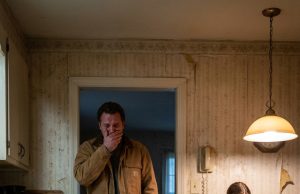
I felt my husband freeze next to me. He understood immediately. We both understood. I tore the edge, and documents spilled out onto the table… DNA test results.
My mother-in-law submitted her DNA sample and compared it with our son.
On the very first page, in bold letters: “Biological relationship not detected.”
My husband’s hands shook. He sat up as if someone had kicked the chair out from under him. She had done it. She had really tried to prove that the child was “not her son’s.” After all, she had been saying this since birth: “He doesn’t look like us. He’s not ours. Something’s wrong.”
We tried not to react. We smiled. We replied that children could look like distant relatives. But her suspicions had been growing for years.
And the scariest part was, she was right. But not in the way she thought.
My husband and I knew from the very beginning that he was infertile. We went through tests, surgeries, despair—and one day, when doctors finally confirmed the impossibility of natural conception, we decided to turn to a donor. It was our shared choice, our secret, which we swore to keep. Not for ourselves, but for the child.
We never wanted our mother-in-law to find out. She’s the kind of person who treats the words “donor” and “non-biological” like d:e:ath sentences.
We looked at each other in utter horror. Not because the secret had been revealed. But because now we were about to have a conversation on which everything could depend—our family, our relationship, our son’s future.