The Sanctuary of the Glass Partition
The specialized care corridor at the St. Jude’s Pediatric Pavilion possessed a specific, haunting variety of silence that defied simple definition. It was not the tranquil, restorative stillness of a high-altitude meadow or the hushed reverence of a cathedral at dawn, but rather a brittle, precarious quiet that seemed to vibrate with the unspoken weight of a thousand fragile prayers. In this wing, hope and trepidation did not merely coexist; they were woven together in the very fabric of the air, hanging suspended over the polished linoleum floors like a low-lying mist. Behind the heavy oak doors, medical monitors performed a rhythmic, electronic staccato, their neon green lines tracing the persistent pulse of lives held in the balance. Nurses moved with the ghostly grace of seasoned shadows, their rubber-soled shoes making almost no sound as they navigated the labyrinth of infusions and chart updates, while in the waiting areas, parents sat like statues in molded plastic chairs, their eyes fixed on magazines whose pages they had not actually read in hours.
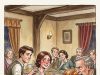
Inside Room 412, eight-year-old Leo Vance pressed his pale, translucent palms against the cool surface of the reinforced isolation window, staring down at the world outside as if it were a distant, unattainable planet. Only six months prior, Leo had been the kind of child who seemed to be composed entirely of kinetic energy and sun-bleached hair, a boy whose mother frequently teased that his DNA must be part lightning because he was perpetually in motion. He had lived for the unscripted chaos of the neighborhood park, for the exhilarating grit of dirt beneath his fingernails, and for the breathless joy of chasing the neighbor’s Golden Retriever through the sprinkler-soaked grass of mid-July. Now, the confines of a high-tech hospital bed had become his entire universe, a sterile island in a sea of antiseptic and white light. A series of aggressive cellular treatments had dismantled his immune system with surgical efficiency, leaving the medical team with no choice but to seal him behind the glass of a positive-pressure room where the outside world—the smell of rain, the touch of a breeze, the texture of a dog’s fur—remained a vivid but untouchable memory.
The Giant and the Broken Road
Late that Tuesday afternoon, as the autumn sun began to cast long, distorted shadows across the hospital’s central courtyard, something peculiar caught Leo’s attention. A man was walking with a slow, deliberate cadence along the brick pathway, favoring his right side with a pronounced limp that hinted at an old, deeply seated injury. His shoulders were broad and immutable, possessing the rigid posture of someone who had spent years carrying the physical and emotional weight of a world most people never see. His dark canvas jacket hung loosely over a frame that suggested a history far more turbulent than the manicured gardens of the medical center, and faded ink climbed his forearms in jagged, intricate patterns that spoke of forgotten battlefields and silent, midnight vigils.
Walking beside him, tethered by a heavy leather lead, was a creature that seemed to be hewn from the very earth itself. The dog was a massive, barrel-chested mix of Cane Corso and Bullmastiff, weighing well over a hundred pounds and moving with a quiet, somber power. His coat was the color of weathered copper, and his face was a living map of old scars; one ear was notched and torn halfway down, a jagged white line bisected the bridge of his snout, and another deep indentation disappeared into the thick muscles of his shoulder. At a distance, the animal was a formidable, almost frightening sight, a physical manifestation of ancient violence.
The security officer stationed near the West Entrance noticed the pair immediately, his hand instinctively resting on his radio as he stepped forward to intercept them. “Sir, you need to stop right there!” he called out, his voice sharp and echoing against the glass walls. “Animals aren’t allowed on the inner grounds, let alone near the patient wings!” The man with the limp didn’t flinch or display the slightest irritation; he simply came to a halt and placed a steady, grounding hand on the dog’s broad head. High above in the isolation room, Leo pressed his face against the glass, his eyes widening as he stared at the largest dog he had ever seen, a creature that looked exactly as scarred and lonely as he felt. Without a conscious thought, the boy raised his small, shaking hand and pressed it against the window.
A Silent Recognition
In that moment, a quiet miracle unfolded—the kind of rare, unscripted event that defies clinical logic but remains etched in the memories of those who witness it. The massive dog looked up, his amber eyes locking onto the small figure on the fourth floor with a startling, intelligent intensity. Instead of continuing down the path, the dog began to walk directly toward the base of the building, moving with a focused, gravitational pull that ignored the frantic protests of the security guard. “I told you to get that beast away from the glass!” the guard shouted, rushing forward to grab the man’s arm.
The stranger didn’t yank the leash; instead, he gave the dog a subtle, almost imperceptible signal with two fingers. The animal padded right up to the glass wall directly beneath Leo’s window and sat down with the solemnity of a gargoyle. Then, he slowly tilted his head back, staring upward through the transparent barrier. Four floors above, Leo’s hand remained glued to the pane, his fingers splayed wide. The giant dog raised his nose and touched the exact point on the glass where the boy’s fingertips rested, a bridge of intent formed across the vacuum of the isolation. To the observers in the courtyard, it was a strange, silent tableau, but inside the oncology ward, the atmosphere changed instantly. Leo erupted into a fit of laughter—pure, unrestrained, and joyous. For the first time in nearly three months, the nurses heard a sound that had become a ghost in those hallways: a child laughing as if the world were still a beautiful place.
The Soldier’s Shadow
The man in the courtyard was named Elias Thorne, a name very few people in the city actually knew. Most who encountered him in the grocery store or at the gas station simply saw the limp, the ink, and the scarred monster at his side, and they usually chose to cross the street rather than risk a closer look. Elias didn’t harbor any bitterness about their judgment; life in the infantry had taught him that fear was often just a lack of information. The dog was named Brutus, and Brutus had once been a resident of a high-kill shelter, destined for a needle after being rescued from a clandestine fighting ring where his only value was measured in blood and endurance. He had been starved, beaten, and forced to fight for a life he didn’t even want.
When Elias first saw him three years ago, Brutus had been huddled in the back of a concrete kennel, his body vibrating with a terrifying mixture of fury and absolute despair. The shelter staff had been unanimous in their assessment: too damaged, too dangerous, beyond salvation. Elias had simply brought a folding chair, sat outside the cage, and waited. He waited for four days without saying a word, understanding that two broken spirits can often recognize the shape of each other’s ruins without the need for an introduction. Eventually, Brutus had crept forward and rested his scarred snout against the chain-link fence, and from that second on, the two of them became an inseparable unit.
The Intervention of the Heart
The encounter at the window might have been a singular, fleeting event if it hadn’t been witnessed by a nurse named Sarah Miller. Having spent fifteen years in the trenches of pediatric oncology, Sarah had developed a keen eye for the kind of medicine that doesn’t come in an IV bag. She had seen children exhibit bravery that would humble a seasoned soldier and had witnessed heartbreaks that made the standard training manuals feel like fiction. When she heard Leo’s laughter, she felt a profound shift in the ward’s energy. The following morning, she found Elias sitting on a bench in the courtyard and sat down beside him.
“You probably know the rules about bringing animals into a medical facility,” she began gently, watching as Brutus rested his head on Elias’s knee.
Elias didn’t look up, his eyes fixed on the hospital tower. “I had a feeling they weren’t exactly welcome.”
“They aren’t,” Sarah admitted, “but that boy in 412 hasn’t smiled like that since his second round of treatment. He’s been fading, Elias.”
Elias finally looked at her, his gaze heavy and discerning. “What’s the kid’s name?”
Sarah told him everything, and by the end of the conversation, a silent pact had been forged. Brutus had already been undergoing therapy certification through a veteran’s outreach program, and Elias had spent his retirement volunteering with animal rescue, but he had never imagined bringing a dog like Brutus into a sterile children’s ward. The hospital administration was, predictably, a wall of bureaucracy and concern. They saw a scarred fighting dog and an immunocompromised ward and saw nothing but liability. For an entire week, Elias sat through meetings, completed piles of paperwork, and agreed to a set of safety protocols that would have exhausted a lesser man. Brutus would be bathed in medical-grade antibacterial soap before every visit, he would wear protective paw coverings, and he would never be more than three feet from Elias’s side. It was a long, arduous process, but Sarah’s persistence eventually wore them down, and the board agreed to a single trial visit.
The Presence of the Brave
On a Friday afternoon at exactly three o’clock, the heavy door to Room 412 creaked open. Leo was propped up against his pillows, looking smaller and paler than he had in the courtyard. When he saw Brutus step through the doorway, wearing a bright yellow “Therapy Dog” vest and little blue rubber booties on his massive paws, the boy’s jaw dropped.
“Whoa,” Leo breathed, his voice a tiny rasp of wonder.
Elias smiled from the threshold, his eyes crinkling at the corners. “I thought Brutus might want to say hello without the glass in the way.”
The dog approached the bed with a staggering, intuitive gentleness, moving as if he understood that the web of wires and plastic tubes surrounding the boy was as fragile as a spider’s silk. He didn’t jump or bark; he simply walked to the edge of the mattress and sighed, resting his enormous copper-colored head on the white sheets. Leo reached out with a trembling hand, his fingers disappearing into the thick fur of the dog’s neck. For a long time, the room was silent except for the rhythmic chirping of the heart monitor and the deep, steady breathing of the dog. In that space, a scarred animal and a struggling child were recognizing each other’s battles in a language that bypassed the need for words.
The Ritual of the Anchor
That first visit evolved into a weekly pilgrimage. Every Friday, Elias and Brutus would arrive at the oncology wing, and Leo would spend the entire week counting down the minutes until their arrival. During the procedures that made the boy cry or the infusions that left him shivering with nausea, he would focus on the thought of the big dog. Sometimes, Brutus was allowed to lie across the foot of the bed, his heavy presence acting as a living anchor for Leo during the darkest hours of his treatment. Elias would sit in the corner, a quiet, immovable sentinel, often whittling small wooden animals from scraps of cedar while the boy and the dog shared a silent, profound communion.
One evening, after Leo had drifted into a peaceful sleep, Sarah found Elias alone in the hallway, leaning against the wall. She had often wondered why a man who clearly preferred the shadows spent so much of his life in a place defined by such public grief. “Can I ask you why you do this, Elias?” she said softly.
Elias reached into his pocket and pulled out a pair of weathered military dog tags, rolling the metal between his calloused fingers. “I had a partner once, during my third tour,” he said, his voice a low rumble. Sarah assumed he meant a fellow infantryman, but Elias shook his head. “He was a detection dog named Sarge. He found the things we couldn’t see.” He explained how Sarge had saved his entire platoon by alerting them to a buried device in a narrow mountain pass, and how the dog had stayed behind when the dust finally settled. Elias had come home with a limp and a silence that felt like a permanent atmospheric condition. “Everyone told me Brutus was too broken to be saved,” Elias said, looking through the door at Leo. “But I’ve learned that things with scars often have the most to give. This kid… he’s fighting a war that nobody else can see. Brutus knows exactly what that looks like.”
The Question at the Edge of the World
As the first snows of December began to dust the hospital windows, the medical updates grew increasingly somber. The latest round of scans showed that the cellular treatments were no longer holding the line, and the leukemia was advancing with a renewed, relentless aggression. No one said the word aloud, but the atmosphere in the ward shifted from a struggle for recovery to a struggle for comfort. Elias began bringing Brutus every day instead of every week, and the hospital staff, recognizing the profound necessity of the dog’s presence, quietly looked the other way regarding the rules.
One night, as the hallway lights were dimmed to a soft amber, Leo opened his eyes and saw Elias sitting in the chair. “Hey,” the boy whispered, his voice as thin as a falling leaf.
Elias leaned in close, his broad hand resting on the bed rail. “I’m right here, buddy. What do you need?”
Leo hesitated, his fingers twisting in Brutus’s fur. Then he asked a question that seemed to stop the rotation of the earth. “Are there dogs in the place we go afterward?”
Elias felt a sharp, agonizing knot tighten in his throat. He had faced ambushes and explosions without ever losing his composure, but this question nearly broke him. He slowly reached up, removed the dog tags from his own neck, and placed them gently in Leo’s small palm. “You bet there are,” he said, his voice thick but steady. “My friend Sarge is up there right now, and he’s probably found the best sunspot in the whole place. He’ll be looking for you.”
Leo smiled, a faint, crystalline expression of peace. “Good,” he murmured, closing his eyes as Brutus rested his chin on the boy’s hand.
The Salute of the Pack
A few hours later, with his fingers curled around the dog tags and Brutus’s paw resting beneath his palm, Leo slipped quietly away into the stillness. The dog was the first to know; he lifted his head from the bed, staring at the boy for a long, silent moment before releasing a low, mournful howl that echoed through the dark hallways of the wing. Every nurse on the floor came to a halt, and several of them wept openly as the sound carried the news of the boy’s departure.
The funeral was intended to be a small, private affair, but when Leo’s parents arrived at the cemetery that Saturday morning, they found the entrance road lined with over a hundred people in stunned silence. There were veterans in pressed uniforms, shelter volunteers, and neighbors who had only known Leo through the stories shared in the community. But most striking were the dogs. Next to nearly every person sat a rescue dog, a silent, furry vanguard standing in the biting winter air. Brutus stood at the very front beside Elias, his black coat standing out against the fresh snow.
As the small casket was carried toward the grave, Elias raised his hand in a sharp, crisp military salute. Brutus stepped forward, lowered his heavy head toward the earth, and released a soft, singular whimper—a final, loyal farewell to the only human who had never looked at his scars with anything but love.
The Legacy of the Wood
Today, just outside Room 412 at the Pavilion, there is a small wooden plaque on the wall. It features a hand-carved image of a laughing boy and a large, scarred dog. Beneath the image, there are only four words: “Love doesn’t need words.” Elias Thorne still visits the hospital, usually with a new rescue dog in tow, helping other broken souls find the strength to keep walking. He carries a different set of tags now, but he often looks at the window of the fourth floor and remembers the boy who taught him that even the most damaged heart still has the power to heal someone else. He knows that somewhere, Leo is running again, and he knows that a dog named Sarge is right there beside him, keeping the path clear.